Augmented Reality (AR) and Virtual Reality (VR) are two innovative technologies that are transforming how we interact with digital content. While both enhance our experience of the digital world, they do so in very different ways. Understanding the difference between AR and VR is important for businesses, educators, and technology enthusiasts alike.
What Is Augmented Reality (AR)?
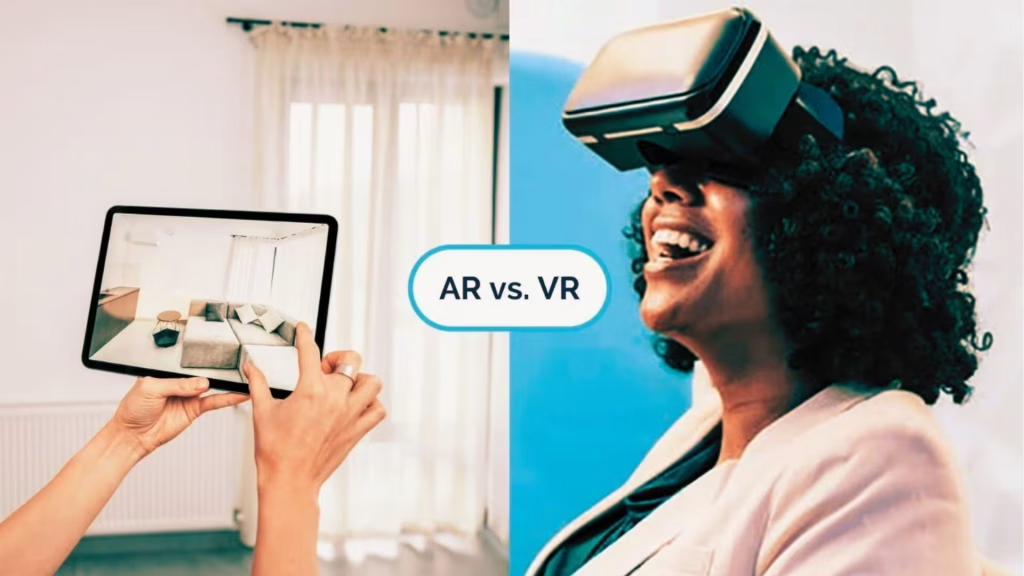
Augmented Reality overlays digital information onto the real world. AR enhances what you see, hear, or feel without replacing your environment. Popular examples include:
- Mobile Apps: Apps like Pokémon Go place digital objects in the real world.
- Retail: AR apps allow users to see how furniture or clothing looks in their home or on themselves.
- Education: AR can display interactive 3D models over textbooks, making learning more engaging.
AR uses devices like smartphones, tablets, or AR glasses. The key advantage of AR is that it adds information to the real world while allowing users to remain aware of their surroundings.
What Is Virtual Reality (VR)?
Virtual Reality creates an entirely immersive digital environment, replacing the real world. VR requires special equipment such as headsets, gloves, or controllers to interact with a fully virtual environment. Examples of VR applications include:
- Gaming: Players enter fully immersive game worlds.
- Training Simulations: VR allows safe training for high-risk jobs like pilots, surgeons, or military personnel.
- Virtual Tours: Users can explore museums, real estate, or travel destinations virtually.
Unlike AR, VR completely isolates the user from the real world, offering a more immersive experience but requiring dedicated hardware.
Key Differences Between AR and VR
| Feature | Augmented Reality (AR) | Virtual Reality (VR) |
| Environment | Enhances real world | Fully immersive digital world |
| Hardware | Smartphone, tablet, AR glasses | VR headset, gloves, sensors |
| User Awareness | User remains aware of surroundings | User is isolated from surroundings |
| Applications | Retail, education, navigation, healthcare | Gaming, training, virtual tours, simulation |
Applications in Business and Daily Life
Both AR and VR are transforming industries:
- Healthcare: AR guides surgeons during procedures, while VR helps in pain management and therapy.
- Education: AR adds interactive layers to learning, and VR enables virtual classrooms or field trips.
- Marketing: AR allows customers to visualize products before buying, while VR creates immersive brand experiences.
Businesses are increasingly adopting these technologies to enhance customer engagement, streamline training, and improve operational efficiency.
Future of AR and VR
The future of AR and VR is promising. AR is expected to become more mainstream with wearable devices, while VR is likely to expand in gaming, training, and virtual collaboration. Integration of AI with AR and VR will make experiences smarter, more interactive, and personalized.
Understanding the difference between AR and VR helps organizations choose the right technology for their goals. Both technologies have unique advantages that can drive innovation and improve user experience.
For more insights on emerging technologies and their impact on business and daily life, visit SparkPressFusion.